
How to choose the right perfume oils to sell
Hundreds of scents, five grades and limited capital. How to pick a first stock that sells, test new scents cheaply, and let your customers decide the reorder.
In this guide
- Start with the customer, not the catalogue
- Cover the directions, not the names
- How many fragrances to start with
- Designer inspired, and what to say about it
- Keep a few that are not viral
- Split your stock into safe sellers and tests
- Let your customers write the reorder
- Track what actually sells
- Match the grade to the budget
- Offer more than one price point
- When a scent is not selling
- You do not have to hold everything
- Become the person who recommends
- Frequently asked questions
- The short version
From the outside a perfume oil business looks simple. Buy oils, bottle them, price them, sell them.
Then you open a supplier's list and there are five hundred fragrances, five grades and a dozen bottle sizes, and your capital covers perhaps ten scents. Every one of those ten slots is a bet. This guide is about placing them well.
You do not need the biggest collection. You need a collection that makes sense for the specific people you are selling to.
Start with the customer, not the catalogue
The easiest mistake in the business is stocking what you like. You may love oud. You may live in vanilla. Your customers may want neither.
You are building a business, not a personal collection. So before you open the catalogue, decide who you are actually selling to:
- Students, who need a low entry price and something that works for daily wear.
- Young professionals, who want office-safe fresh scents and one statement fragrance.
- Men or women specifically, or couples buying together.
- Gift buyers, who care about presentation as much as the scent.
- Budget buyers, who want smelling good to be affordable every week.
- Enthusiasts, who want something premium or something nobody else is wearing.
Pick one or two to begin. Once you know who is buying, the choice of scents mostly makes itself.
Cover the directions, not the names
Instead of choosing individual fragrances at random, build the collection around the families people actually ask for. One or two scents in each gives you range without spending on dozens:
- Sweet and gourmand
- Vanilla, caramel, creamy, edible. Consistently among the fastest movers in the Nigerian market.
- Fresh and clean
- Easy to wear to work, school or church. The safe daytime answer, and the one that copes best with heat.
- Floral
- Romantic, feminine, elegant. The request you will hear every week.
- Fruity
- Bright, playful and young. Pairs well with a student or first-job customer.
- Woody
- Polished and mature. Where a lot of the men's requests land.
- Oud and amber
- Deep, rich and intense. Where the higher price points and the evening and occasion buyers live.
- Musky
- Clean, soft, skin-like. The quiet scent people wear every day and reorder without thinking.
- Unisex
- For anybody who wants neither overtly masculine nor overtly feminine, and your best answer for a gift.
Eight directions, eight to sixteen scents. That is a real range. Browse over 500 scents with those families in mind and you will find the shortlist narrows fast.
How many fragrances to start with
Ten to twenty well chosen scents is plenty, and on tighter capital six to ten is fine. The number matters less than what you learn from it.
The goal is not to say you have a hundred fragrances. It is to know which of yours actually sell. A small range tells you that within weeks. A huge one spreads your money so thin that nothing gives you a clear signal.
Designer inspired, and what to say about it
Inspired oils are a strong part of any starting range for one reason: the customer arrives already knowing what they want. They name a fragrance they love, and you can answer in one message instead of teaching them a scent from nothing.
Be straight about what it is. What you sell is your own fragrance inspired by a known scent profile, not the original, and not made by, affiliated with or endorsed by the house behind it. Say that in your captions and on your labels. How we describe our own inspired range.
Keep a few that are not viral
Not every good seller is trending. Some customers want the opposite: they do not want to smell like everybody at the wedding.
Two or three less common scents make you the seller people come to when they want something different. That is a loyal, repeat-buying customer, and a reason to choose you over a cheaper stall with the same ten names.
Split your stock into safe sellers and tests
This is the single most useful stock habit in the business, and it removes most of the risk from trying new scents.
- Safe sellers
- Scents you already know people buy. Keep them in stock consistently, in the volumes that match how fast they move. Running out of a safe seller costs you the sale and teaches the customer to look elsewhere.
- Tests
- New or unproven scents. Buy the smallest sensible quantity, put them in front of customers, and watch. If one moves, promote it. If it sits, you have lost very little.
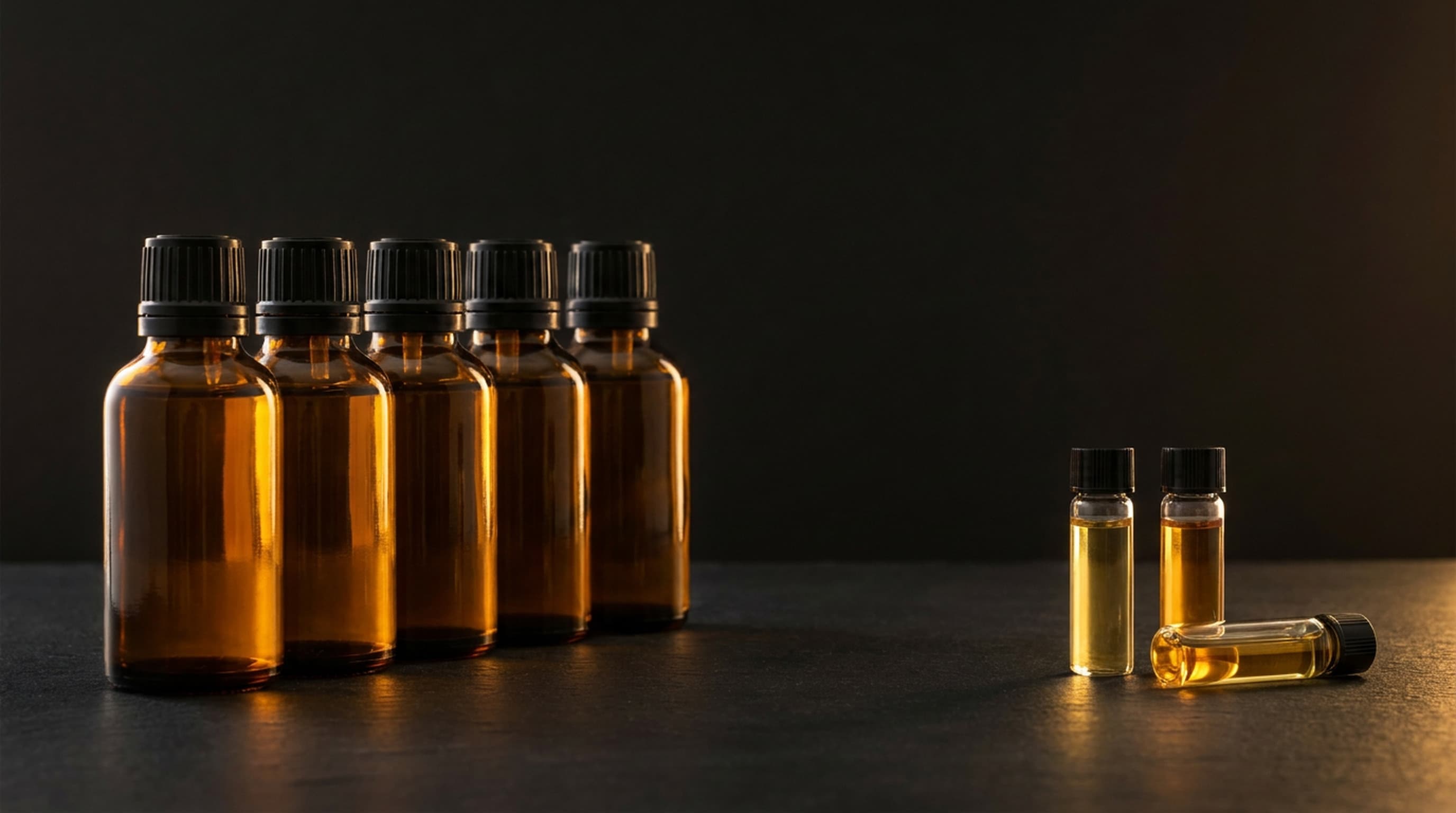
Buying a smaller 100ml of a test scent costs more per millilitre than a 500ml. That premium is the price of finding out, and it is far cheaper than a litre of something nobody wanted.
Let your customers write the reorder
Your customers are handing you market research every week. You only have to write it down.
Five people ask in one week for a sweet feminine scent. Two more ask for something strong and masculine. That is information, including the requests you could not fill. Keep a simple running list of every request, and after a month the pattern is obvious.
Track what actually sells
Do not trust memory, because memory remembers the exciting sale and forgets the steady one. Keep one line per scent: how much you bought, how much sold, how much is left, and how many times it was reordered by the same person.
After a few weeks the numbers tell a story. The scent that keeps running low is a best seller. The one that has barely moved in two months needs either a better description or a replacement. And the one that people come back for is worth more than either, because a scent with repeat-purchase potential is a business on its own.
Match the grade to the budget
It is tempting to buy only the top grade because it is the best. But your business needs demand, price and margin as much as quality.
In our range the grade changes the longevity, not the fragrance: the same scent at Premium holds about six hours and at 2x Alpha runs past forty-eight. So choose by what your customer pays for, not by pride:
- Premium and Top for affordable everyday buyers and your cheapest trial sizes.
- Super for customers who want to be noticed and will pay for it. Most resellers settle here.
- Alpha and 2x Alpha for enthusiasts, occasions and gifts with real budget.
A fantastic oil priced for a ₦15,000 roller will not sell to a market that spends ₦5,000. That is a positioning mistake, not a product one. Compare the five grades, or read which grade you should buy.
Offer more than one price point
Not everybody who wants your scent can spend the same amount on it. Sizes let you serve all of them from one stock:
- 3ml, the entry point and the cheap way to try you.
- 6ml, the affordable first real order.
- 10ml to 20ml, the portable everyday bottle.
- 30ml and up, the larger purchase once they are sure.
Someone who cannot afford a big bottle today will happily buy a small one, and that is often the start of a bigger order later. Bottles from 3ml to 250ml.
When a scent is not selling
Before you write it off, check how you are presenting it. The problem is often the post rather than the perfume.
Compare Vanilla perfume available, ₦5,000 with If you love sweet perfumes but do not want anything that smells childish, this is the one I would recommend. The second gives somebody a reason to picture themselves wearing it.
If it still does not move after a fair try, stop reordering it. Your favourite does not have to be your best seller, and it is not your job to convince customers to like what you like.
You do not have to hold everything
With access to a large catalogue, you can offer far more than you physically stock. Sort it into three tiers:
- Fast movers
- Always in stock.
- Steady sellers
- Held in smaller quantities and reordered on a rhythm.
- Requests
- Ordered in when a customer asks. Variety without capital sitting in slow stock.
We carry over 500 scents and dispatch nationwide on Fridays and Saturdays, so your request tier can be as wide as the catalogue while your shelf stays lean. For volume on your fast movers, see wholesale pricing.
Become the person who recommends
This is the edge that cannot be undercut on price.
A customer says they want something sweet but not too sweet, and you have two answers ready. Somebody wants masculine but not harsh, and you know exactly what to show them. Somebody wants to smell expensive, and you can narrow it to three.
Most customers do not know which fragrance they want. They know the feeling: expensive, clean, sweet, powerful, soft, different. Your job is to translate that feeling into a bottle. Do it well and you stop being a seller and become their person for perfume.
Frequently asked questions
Which perfume oils sell best in Nigeria?
Sweet and gourmand scents are consistently among the fastest movers, followed by fresh and clean scents for daytime and office wear, and oud and amber for evenings and occasions. Floral requests are steady, and unisex scents are the easiest to sell as gifts. Your own customers' requests are the most reliable guide.
How many perfume oils should I start my business with?
Ten to twenty well chosen scents is plenty, and six to ten is fine on a tighter budget. Cover the main families rather than stacking several of one kind, then let what sells decide the next order.
Should I stock the fragrances I like?
Only if your customers like them too. You are buying inventory for other people, so choose by the customer you are selling to. Your personal favourite can be one of your test scents rather than a large part of your first order.
Is it better to buy a large quantity of one perfume oil to save money?
Only for scents you already know sell. A lower price per millilitre is no saving if the oil sits for six months, because your capital is tied up. Buy tests in small quantities and scale up only once a scent has proved itself.
Which grade of perfume oil should a reseller buy?
The one your customers can buy repeatedly. Premium and Top suit affordable everyday markets and small trial sizes, Super is where most resellers settle, and Alpha and 2x Alpha suit enthusiasts, occasions and gift buyers. The fragrance is the same across grades; the longevity and price change.
What should I do with a perfume oil that is not selling?
First change how you present it: describe what it smells like and who it suits instead of posting the name and a price. If it still does not move after a fair try, stop reordering it and put the money into scents that have proved themselves.
Do I need to physically stock every fragrance I offer?
No. Keep your fast movers in stock, hold steady sellers in smaller amounts, and order requested scents as they come in. That gives customers wide choice without your capital sitting in bottles nobody has asked for.
The short version
Know your customer. Cover the families. Start small. Split safe sellers from tests. Track every scent. Match the grade to the budget. Offer more than one size. Listen to requests, restock the winners and quietly drop the rest.
The fragrance business is not about having the most perfumes. It is about having the right ones for the right people, and knowing which is which.
Ready to build your first range: browse over 500 scents, take a Business Starter Pack where you choose your scents from a shortlist, or message us and tell us who you are selling to. Next, work out what each bottle leaves you.