
Everything you need to make perfume at home
The complete beginner’s checklist for making perfume at home: perfume oils, alcohol, DPG, fixatives, bottles and measuring tools, and what each one does.
In this guide
- Can you really make perfume at home?
- 1. High quality perfume oils
- 2. Perfumer’s alcohol
- 3. Ethanol
- 4. DPG (dipropylene glycol)
- 5. Perfume fixatives
- 6. Measuring tools
- 7. Funnels
- 8. Perfume oil bottles
- 9. Labels
- 10. Packaging
- Should you buy everything separately?
- Where to buy it all in Nigeria
- Frequently asked questions
- Final thoughts
“I would love to make my own perfume, but I do not even know where to start.”
If that is you, you are in good company. Most people never start, and it is almost never because perfume making is difficult. It is because nobody handed them the list.
They buy perfume oils and forget the alcohol. They buy bottles with nothing to measure into them. They spend three weeks ordering from four different suppliers and still find something missing on mixing day.
Here is the whole checklist, what each item actually does, and where beginners lose money.
Can you really make perfume at home?
Yes. Professional perfumery takes years and serious equipment, but making a good, luxury-inspired perfume at home takes quality materials and a recipe worth following.
People do it for daily wear, for gifts, for refill businesses, for side income and for full perfume brands. The only step everyone skips is knowing what belongs in the toolkit.
1. High quality perfume oils
Every perfume starts here. The perfume oil is the fragrance itself, and no alcohol or fixative rescues a weak one.
Look for oils that:
- Smell clean and balanced rather than sharp and chemical.
- Are consistent from batch to batch, so your second order matches your first.
- Hold for as long as the seller claims they hold.
- Match the fragrance profile you are actually chasing.
We stock over 500 designer perfume oils and niche-inspired blends in five grades, so you pick the scent and the staying power separately. Browse the perfume oils, or compare the five grades first if you are not sure how long you need it to last.
2. Perfumer’s alcohol
Perfumer’s alcohol is the single most important ingredient in a spray perfume after the oil. It carries the fragrance, creates the fine mist, evaporates cleanly off the skin and leaves the scent behind rather than a wet patch.
Quality genuinely matters here, because the alcohol becomes part of what people smell in the first thirty seconds. Shop perfumer’s alcohol.
3. Ethanol
Ethanol is the raw solvent behind most perfume formulations. Its job is to dissolve the perfume oil and let the blend spray evenly instead of spitting.
It is priced for volume, which is why makers who mix regularly move onto it. Shop ethanol.
4. DPG (dipropylene glycol)
Most beginners skip DPG because nobody explained it. It improves how the ingredients sit together, softens a harsh blend and helps the fragrance stay stable in the bottle.
It is also the base for oil based perfumes, roll-ons and perfume body oil, where there is no alcohol at all. You do not notice DPG when it is there. You notice when it is missing. Shop DPG, or read perfumer’s alcohol vs ethanol if you are still choosing between the three.
5. Perfume fixatives
If you have ever wondered why one perfume vanishes by lunchtime and another is still on your collar the next morning, fixatives are part of the answer.
A fixative slows down how fast the fragrance molecules evaporate, which stretches the wear time. It is one piece of the puzzle, not a magic ingredient. Good performance still comes from quality oil, a balanced formula and proper maturation. Shop fixatives.
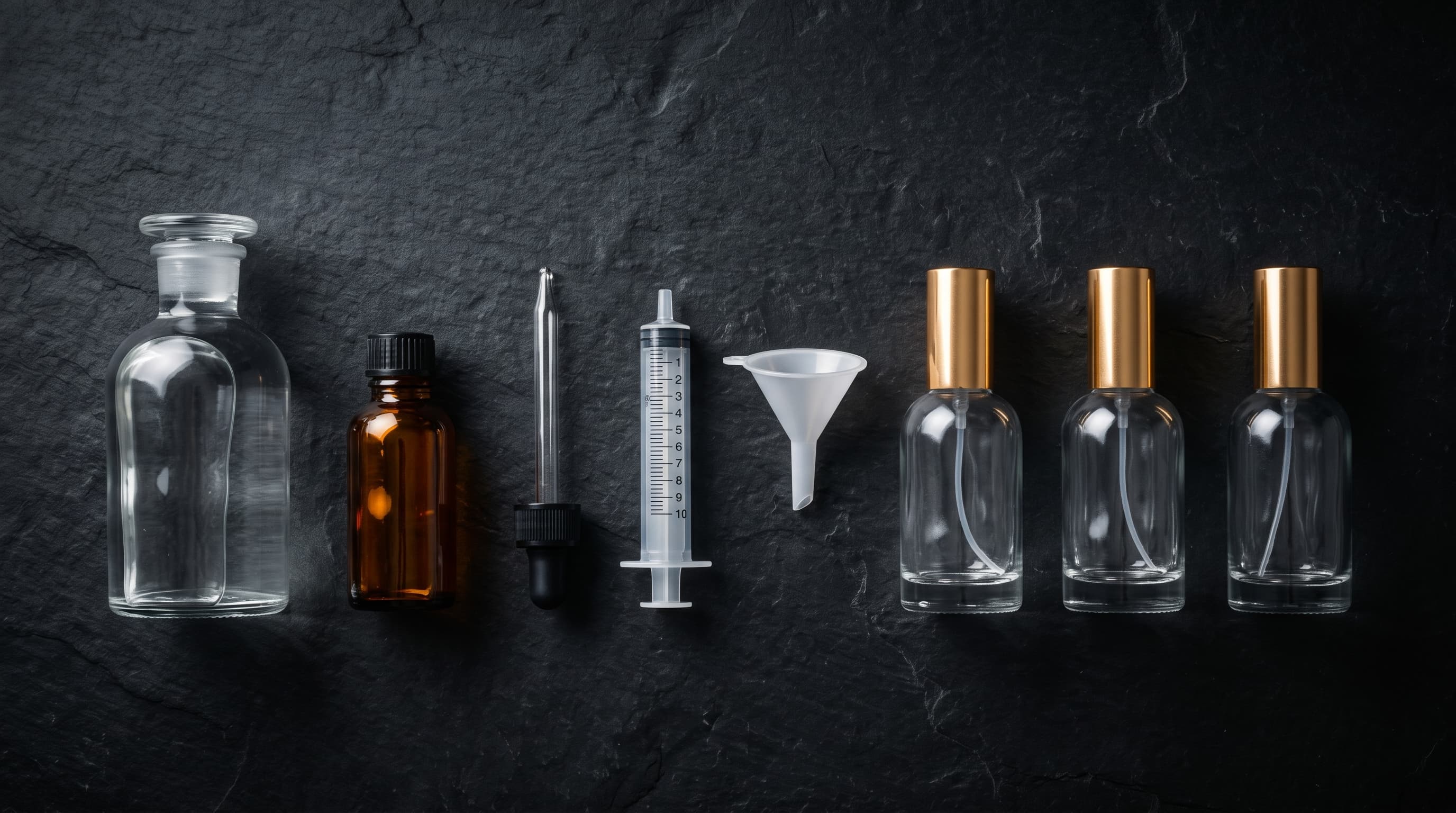
6. Measuring tools
Perfume making rewards accuracy. Guessing means you can never repeat the blend you loved. Use:
- Syringes for small, exact amounts of oil.
- Pipettes for drop-level control.
- A graduated measuring cylinder for your base.
- Measuring cups for larger batches.
Write down what you used. A formula you cannot reproduce is a formula you do not own.
7. Funnels
A small funnel sized for perfume bottles is the cheapest item on this list and one of the most useful. It stops spills, and spilled oil is spilled money.
8. Perfume oil bottles
A good perfume deserves glass that does it justice. Choose bottles that spray evenly, seal properly, protect the fragrance from light and look like something you would pay for.
We stock glass from 3ml samples up to 100ml retail bottles, one at a time or by the dozen. Shop perfume bottles.
9. Labels
Presentation is part of the product. A clean label makes a homemade perfume read as a brand. Yours should carry:
- Your brand name.
- The perfume name.
- The bottle size.
- The product type, for example eau de parfum or perfume oil.
- Batch information if you are selling.
Branding earns trust before anybody has smelled anything.
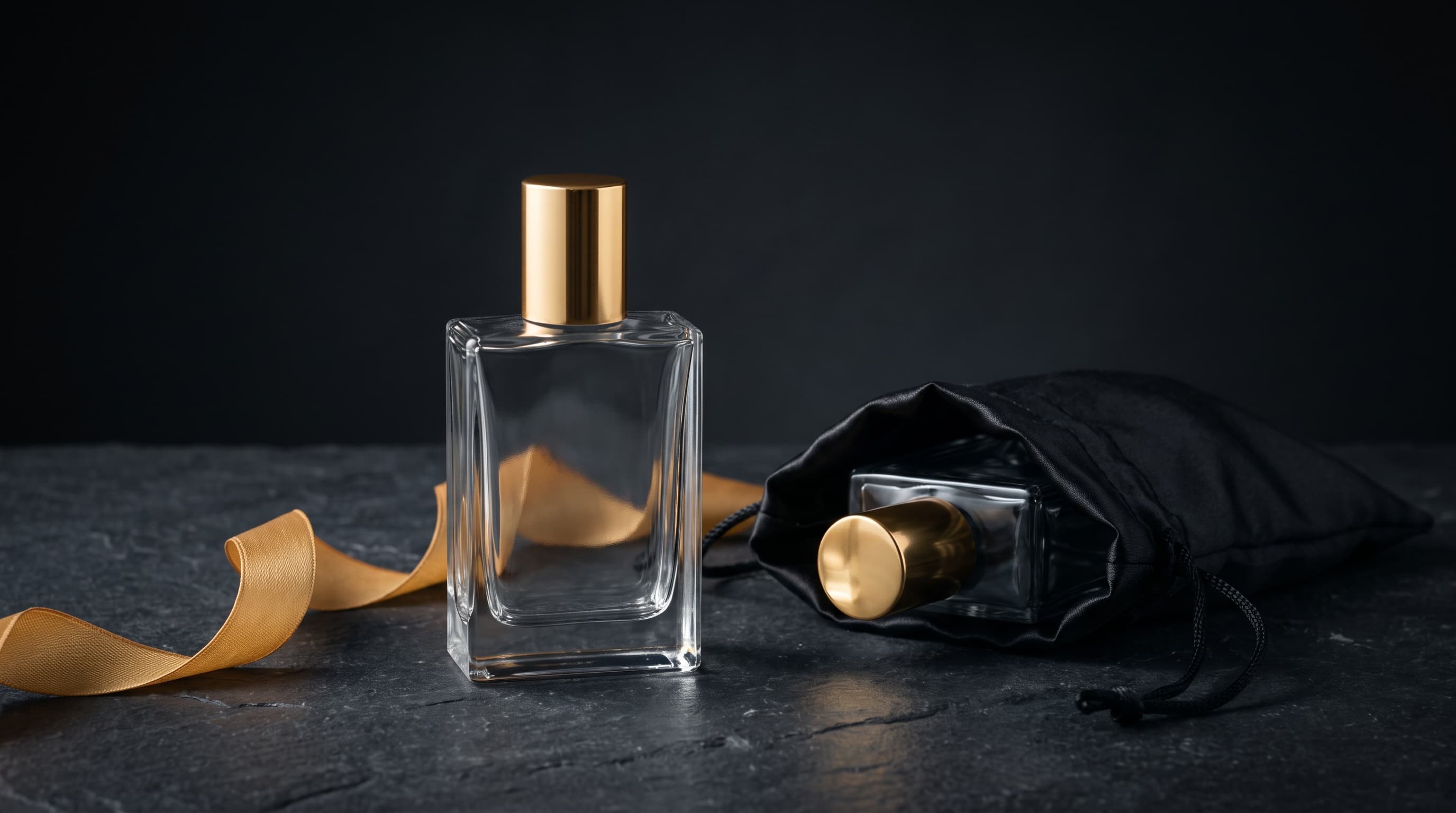
10. Packaging
If you are selling, packaging is where a ₦10,000 bottle starts feeling like a ₦25,000 bottle. Satin bags, branded shopping bags, tissue paper and a thank-you card cost little and change how the whole thing lands. Shop DIY supplies.
Should you buy everything separately?
You can, and plenty of people do. But sourcing across several suppliers costs more time than anyone expects, and it is usually more expensive once delivery is counted four times.
Buying it as one kit means:
- Everything arrives together, so nothing blocks mixing day.
- The components are chosen to work with each other.
- You spend your energy creating instead of searching.
- You are not guessing at quantities on your first attempt.
Start your line packs bundle the oil, base, fixative and bottles at one price, matched so nothing in the box fights anything else. See the packs.
Where to buy it all in Nigeria
Beyond The Bottle carries the whole checklist, from a single 100ml of oil to wholesale perfume oils by the litre. We deliver nationwide, dispatching Fridays and Saturdays, with collection available in Lagos.
If you are still comparing suppliers, we wrote the honest version here: where to buy perfume ingredients in Nigeria. Buying at volume? Send a bulk enquiry.
Frequently asked questions
Do I need every item on this list?
For a complete spray perfume, each item has a role. If you are making an oil based perfume or a roll-on you can skip the alcohol entirely and work with DPG instead. The measuring tools and bottles you always need.
Can a complete beginner use a perfume kit?
Yes. A kit exists precisely so a first-timer does not have to guess at what pairs with what. It gives you the essential materials in one package, already matched.
How much does it cost to start making perfume at home in Nigeria?
Far less than most people assume. A 100ml of perfume oil, a base, a fixative and a few bottles will get you your first batch. Buying it as a Start your line pack is usually cheaper than sourcing each piece separately once delivery is counted.
Can I use these materials to start a perfume business?
Yes. Most small perfume brands begin exactly here. Buy your oils at wholesale rather than retail so the margin works, keep the grade consistent so repeat customers get the same scent, and follow any cosmetic product regulations that apply in your market.
Where can I buy everything in one place?
Beyond The Bottle supplies perfume oils, perfumer's alcohol, ethanol, DPG, fixatives, bottles, measuring tools, funnels, packaging and complete kits, plus training, with nationwide delivery in Nigeria.
Final thoughts
Learning to make perfume does not begin with mixing. It begins with preparation.
With the right ingredients, the right tools and a recipe worth following, the process stops being intimidating and starts being the enjoyable part.
Whether you are creating a signature scent, making gifts or building a brand, quality materials give you the best shot at something you are proud of. Start with the oils.